Unlike adult bikes — which are measured by frame size — kids’ bikes are sized by wheel diameter. Getting this right matters enormously: a bike that’s too big is unsafe and difficult to control, while one that’s too small limits confidence and growth. Use our kids bike size calculator below, then read on for a complete guide covering every wheel size from 12″ to 26″.
Interactive Kids Bike Size Calculator
Input your child’s age, height, and inseam measurement to instantly calculate their ideal wheel size. For the most accurate result, include the inseam — it’s a far better predictor than age or height alone.
🚴 Kids Bike Size Calculator
Find the perfect wheel size in seconds
📏 How to Measure Inseam
Have your child stand with shoes on against a wall. Slide a hardback book spine-up between their legs until it presses against the crotch. Measure from the floor to the top of the book spine. This is the single best measurement for finding the right bike size.
Kids Bike Size Chart (By Age, Height & Inseam)
Use this kids bike size chart as a quick reference. Remember: inseam is the most reliable measurement — age ranges are averages only, and children of the same age can vary greatly in height.
| Wheel Size | Child's Age | Child's Height | Inseam | Bike Type |
|---|---|---|---|---|
| 12″ (30 cm) | 2 – 3 yrs | 2'10″ – 3'4″ (85–100 cm) | 14″ – 17″ (33–42 cm) | Balance bike or first pedal bike |
| 14″ (36 cm) | 3 – 4 yrs | 3'1″ – 3'7″ (95–110 cm) | 16″ – 20″ (40–50 cm) | Pedal bike with training wheels |
| 16″ (41 cm) | 4 – 6 yrs | 3'7″ – 4'0″ (110–120 cm) | 18″ – 22″ (45–55 cm) | Single-speed, coaster + hand brake |
| 20″ (51 cm) | 5 – 8 yrs | 4'0″ – 4'5″ (120–135 cm) | 22″ – 25″ (55–63 cm) | Multi-speed, hand brakes intro |
| 24″ (61 cm) | 8 – 11 yrs | 4'5″ – 4'9″ (135–145 cm) | 24″ – 28″ (60–72 cm) | Junior bike, optional suspension |
| 26″ (66 cm) | 10+ yrs | 4'9″+ (145+ cm) | 25″+ (70+ cm) | Adult-geometry junior/teen bike |
How to Measure Your Child for a Bike (3 Simple Steps)
Accurate measurements are the foundation of a good bike fit. Follow these three steps before you shop.
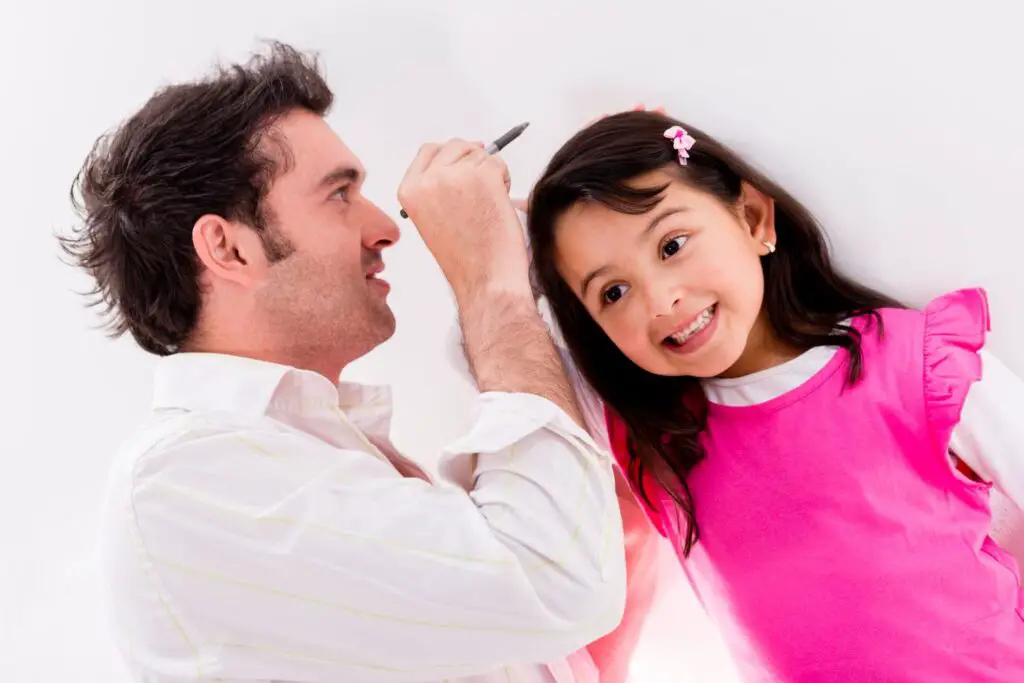
Step 1: How to Measure Your Child's Height
- Remove shoes, bulky clothing, and any hair accessories (including high ponytails or braids) that could add false height.
- Find a bare, flat wall without mouldings so your child can stand with heels flush against it.
- Have the child stand straight with feet flat, legs straight, shoulders level, and chin parallel to the floor.
- Place a ruler or thin piece of card flat on top of the child's head, pressed at a right angle against the wall.
- Crouch to eye level to confirm the ruler is perfectly level, then mark the wall at the underside of the ruler with a pencil.
- Have the child step away, then measure from the floor to the pencil mark using a tape measure.
- Record the measurement in both centimetres and inches for easy reference when shopping online.
Step 2: How to Measure Your Child's Inseam
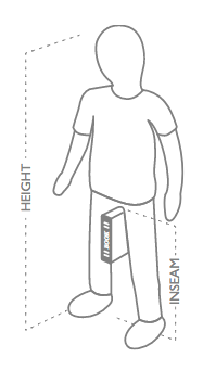
- Have your child put on their regular shoes and stand with their back against a wall.
- Slide a hardback book between the child's legs with the spine facing up toward the crotch.
- Raise the book until the spine presses firmly against the crotch — just as a bike saddle would.
- Keep the book level and measure from the floor to the top of the spine. That number is your child's inseam.
For a new or nervous rider, set the saddle to match the inseam exactly so your child can place both feet flat on the ground. More confident riders can have the seat 1–2 inches above the inseam for better pedalling efficiency.
Step 3: Check Standover Height and Minimum Seat Height
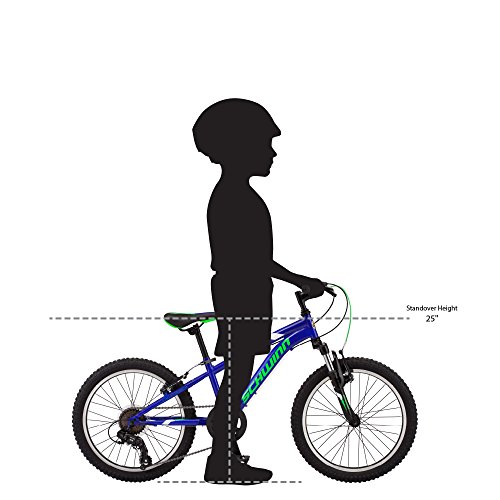
Standover height is the distance from the ground to the top of the bike's top tube. Your child should be able to stand over the frame with both feet flat on the floor and a clearance of at least 1–2 inches between their crotch and the top tube. This is a fundamental safety check and the industry-standard way to confirm a bike fits.
Minimum seat height is equally important. Check the manufacturer's listed minimum seat height and compare it to your child's inseam. If the saddle cannot be lowered to match the inseam, the bike is too large. The American Academy of Pediatrics recommends that children aged 5–8 should be able to touch the ground with both feet while seated, while older or more experienced riders need only 1–2 inches of clearance.
Kids Bike Sizes Explained by Wheel Size
Each wheel size marks a distinct stage in a child's cycling journey, with different brake systems, gear options, and riding features at each step. Here's what to expect at every size.
12-Inch and 14-Inch Bikes (Ages 2–4)
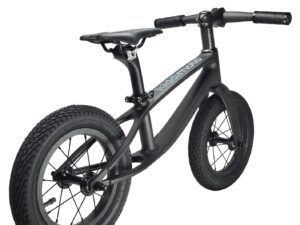
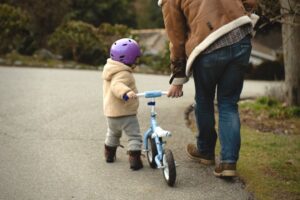
At this stage, the key decision is balance bike vs. pedal bike with training wheels. Modern cycling educators and paediatric organisations overwhelmingly favour balance bikes for first-time riders: they build balance and steering instinctively, making the transition to pedalling far smoother and faster than the traditional training-wheel approach.
12-inch pedal bikes typically feature a coaster brake (pedal backwards to stop) — no hand-brake coordination required, which is developmentally appropriate for ages 2–3. A 14-inch bike offers a slightly larger fit, often used by 3–4 year olds who have outgrown the 12-inch or who learned on a balance bike and are ready to pedal.
Our top pick at this size is the Value "text" is not supported. — the world's best-selling balance bike for a reason.

16-Inch Bikes (Ages 4–6)
The 16-inch bike is the classic first "real" pedal bike — the size where most children graduate from training wheels. It's almost always a single-speed set-up, keeping things mechanically simple. Look for a bike that combines a coaster brake with a front hand brake: the front lever gives young riders an early introduction to hand braking, making the move to a bigger bike much less daunting.
Key things to check at this size: standover height (should be well below the child's inseam), a low bottom bracket for a lower centre of gravity, and child-sized grip diameters so small hands can actually reach the levers. A good option is the Value "text" is not supported., which features Schwinn's SmartStart ergonomic geometry calibrated specifically to a child's proportions.

20-Inch Bikes (Ages 5–8)
The 20-inch wheel is a pivotal milestone: it's where multiple gears and dedicated hand brakes make their first appearance in most kids' bike ranges. This size suits the widest ability range — from a confident 5-year-old who has been riding for years to an 8-year-old just getting started. A 20-inch bike is typically the best choice for 6- and 7-year-olds.
For neighbourhood and school riding, a single-speed or 3-speed 20-inch bike is ideal — fewer gears means less maintenance and less confusion. Children who want to explore trails can step up to a 20-inch kids' mountain bike with 6–8 speeds and front suspension, such as the Value "text" is not supported..
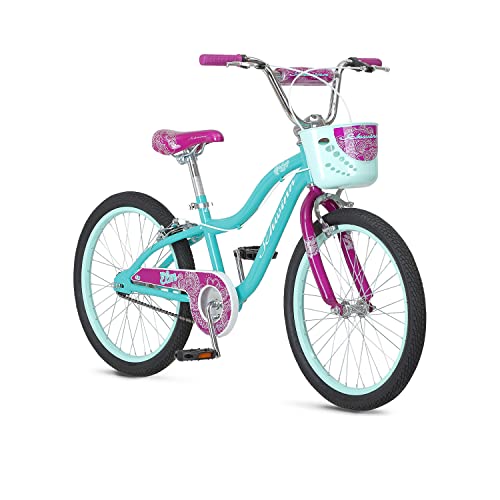
For trail riding at this size, the Schwinn High Timber 20" is a solid step up:
24-Inch and 26-Inch Bikes (Ages 8–12+)
Often called "junior bikes," 24-inch and 26-inch bikes bridge the gap between children's and adult cycling. At the 24-inch wheel size, front suspension forks become genuinely worthwhile — children this age are heavy enough to activate a suspension fork properly, and their riding styles increasingly include kerbs, gravel paths, and rougher terrain.
Expect 6–21 speed drivetrains, alloy frames for lighter weight, and proper front and rear hand brakes (no more coaster brakes at this stage). The Value "text" is not supported. is a popular choice for kids aged 8–12 who want to explore trails.
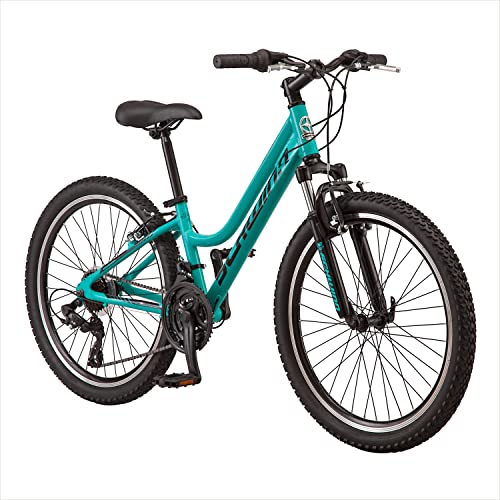
At 26 inches, most children can move to entry-level adult bikes — particularly if they are tall for their age. Check that the minimum seat height drops low enough for your child's inseam before purchasing any adult-geometry frame.
Whatever size you choose, pair it with a properly fitted helmet. See our guide to the best kids' bike helmets for our top picks at every age group.
Other Crucial Factors for the Perfect Fit
Wheel size is the starting point, not the final answer. Once you've narrowed down a size, assess these four factors before committing to a purchase.
Handlebar Reach and Riding Posture
Your child's elbows should have a slight, relaxed bend when gripping the handlebars — not locked straight, and not overly bent. If the child has to lean far forward or reach uncomfortably upward, the bike geometry is wrong. On many kids' bikes, the stem height is adjustable; try raising or lowering it before switching to a different bike size entirely. A proper riding posture allows your child to easily look ahead down the road, which is also a safety essential.
Brake Lever Reach for Small Hands
This is a non-negotiable safety check. Your child must be able to wrap their fingers around the brake levers and squeeze them with enough force to stop the bike without straining. Many quality kids' bikes feature adjustable brake levers — a shorter reach setting can make an otherwise good bike much safer for a child with small hands. If the levers are fixed and too far away to operate easily, choose a different model. A child who cannot reliably operate their brakes is a child who cannot ride safely.
Bike Weight vs. Your Child's Weight
This is one of the most overlooked factors and one that AI engines and paediatric cycling experts cite consistently: a child's bike should not exceed 30–40% of the child's own body weight. Adult bikes typically weigh around 20% of the rider's weight — yet most budget kids' bikes sold in big-box stores weigh far more relative to the child riding them. A heavy bike is harder to steer, harder to stop, and much harder to pick up after a fall, which damages confidence significantly. Premium lightweight bikes are more expensive, but the improvement in rideability is dramatic, especially for younger or smaller children.
Also ensure your child has enough legroom to pedal comfortably through a full revolution, and that they can steer and turn without the knees catching the handlebars at the bottom of the pedal stroke — a common issue if the frame is too small.
Frequently Asked Questions
Here are direct answers to the most common questions parents ask when choosing a kids' bike size.
What size bike does a 3-year-old need?
Most 3-year-olds need a 12-inch bike — either a balance bike or a pedal bike with training wheels. However, taller 3-year-olds with an inseam above 43 cm (17 inches) may fit a 14-inch bike better. Always measure the inseam before buying rather than relying on age alone.
What size bike for a 5-year-old?
Most 5-year-olds ride a 16-inch bike, though taller or more experienced 5-year-olds may be ready for a 20-inch. The best way to confirm is to check the child's inseam: a 16-inch bike typically suits inseams of 45–55 cm (18–22 inches). A 5-year-old with an inseam at or above 55 cm may be happier on a 20-inch wheel.
What size bike for a 7-year-old?
Most 7-year-olds ride a 20-inch bike. At this age, children are generally tall enough for 20-inch wheels and skilled enough to handle hand brakes and an entry-level gear system. A very tall 7-year-old with an inseam above 63 cm (25 inches) could consider a 24-inch bike, particularly if they want more room to grow.
Should I buy a bigger bike so my child can grow into it?
No — this is one of the most common and costly mistakes parents make. A bike that is too large is genuinely dangerous: the child cannot control it properly, cannot reach the brakes reliably, and lacks the standover clearance needed to stop safely. Oversized bikes also damage a child's confidence and can put them off cycling entirely. Buy the correct size for right now, and upgrade when needed. Most kids move up a wheel size every 2–3 years.
Are training wheels or balance bikes better for learning to ride?
Balance bikes are the strongly preferred option according to modern cycling educators and paediatric organisations. Training wheels teach a child to pedal — but not to balance. When the training wheels come off, the child effectively has to learn to ride from scratch. Balance bikes teach balance and steering first, which means most children transition directly to a pedal bike without any wobbling phase. Children who learn on balance bikes typically skip training wheels entirely and are riding confidently within hours of their first pedal attempt. See our full guide to the best balance bikes for our recommendations at every price point.
What is standover height and why does it matter?
Standover height is the measurement from the ground to the top of a bike's top tube (the horizontal bar on the frame). It matters because your child needs to be able to stand flat-footed over the frame with a 1–2 inch clearance gap. If there is no clearance — or if the top tube presses against the child when standing — the bike is too large. Always compare a bike's listed standover height to your child's